Borghamn, idyllically situated between Vättern, Tåkern and Omberg, can look back on more than 900 years of limestone
quarrying tradition. In 1143, Cistercian monks from France came to Alvastra and founded their monastery there. They
quarried the stones for the monastery in the Västerlösa quarry.
The conditions were favourable. From the north side of the Omberg, a deposit of limestone stretches towards Motala and
on to Lake Roxen. At Omberg and near the beach, the stone lies directly below the surface. The quality there is quite
good. And Lake Vättern also provided a suitable transport route.
Even church buildings in the neighbourhood also benefited from limestone quarrying here in Västerlösa.
Over the centuries, many buildings have sourced their building materials from Borghamn:
- Visingsborg
- Västanå Castle
- Vadstena Abbey church
- Vadstena Castle
In some cases, building materials were reused from the Alvastra monastery, which was closed during the Reformation and
destroyed by Danish troops led by Daniel Rantzau during the Northern War in 1567.
The quarry experienced its heyday in the 19th century with the construction of the Göta Canal (beginning 1810, end 1824)
and the fortress in Karlsborg (beginning 1821, end 1909). A harbour was needed to ship the required quantities of stone.
There was no natural harbour here on the Omberg, which is why a small harbour was initially built into the lake from the
shoreline after 1810 ("Borghamn"). The extensive buildings in the harbour area were also constructed at this time, on
the site of the old quarry that had been filled in. Further harbour expansions took place in later years.
1842 was a decisive date in the history of Borghamn. The quarry had always been operated privately or by the Göta Canal
Company, but in 1842 the Crown Labour Corps (Kronoarbetskåren, a penal corps) took over. At the same time, the site,
which was located in the area of both Västerlösa Gård and the village of Bårstad, was given its current name: Borghamn.
It is derived from the wallfort from the Migration Period above the harbour (Drottning Ommas Borg) and the harbour itself.
The regiment consisted of 600 men:
- Soldiers convicted of minor offences
- those sentenced to life imprisonment, who had to do a few years of labour before being pardoned
- and vagrants who were forced to work.
500 men were deployed in Karlsborg to build the fortress, 100 more were deployed in Borghamn. There was also a roughly
equal number of civilian labourers in Borghamn.
Construction of the fortress began in 1821 and was to take ten years. But after 25 years, not even half of the
construction had been completed.
The construction of the National Museum (1850-1863) in Stockholm, where limestone from Borghamn was also used,
also took place during this heyday of the quarry.
In 1894, the Kronoarbetskår was shut down and removed from Borghamn.
A new era began in 1920, when the state finally withdrew from the quarry. Stone quarrying and stone processing were
privatised again in 1923. In 1923, the buildings in the harbour became the Landhushållsskola (Land Household School),
a boarding school where young women were trained in the management of a then modern country household. It became a
secondary school in 1971 and was renamed Borghamnsskola. In 1982 it became the responsibility of the municipality of
Vadstena, but was moved to Vadstena in 1997 ("Vadstena Gymnasiet"). It is no longer located there, but is now part of
the Carlsund Education Centre in Motala as a "hotel and tourism programme".
The buildings in the harbour have been used as a youth hostel since this year. The quarry is still state-owned by
Sveaskog, which is also responsible for Ekopark Omberg, while the quarry and stone processing (Borghamnssten AB) are
privately operated. The harbour and its buildings have been owned by Atsmon Förvaltning AB since 2018. Borghamn Strand
with hotel, hostel and café has been located there ever since.
Borghamn is a quiet holiday and excursion destination and, with Omberg, Vättern and the proximity to Tåkern, offers many
opportunities for those seeking relaxation and those interested in nature.
Those interested in the history of the quarry, the harbour, Drottnings Ommas Borg, the deer park era and other sights
can take part in guided tours.
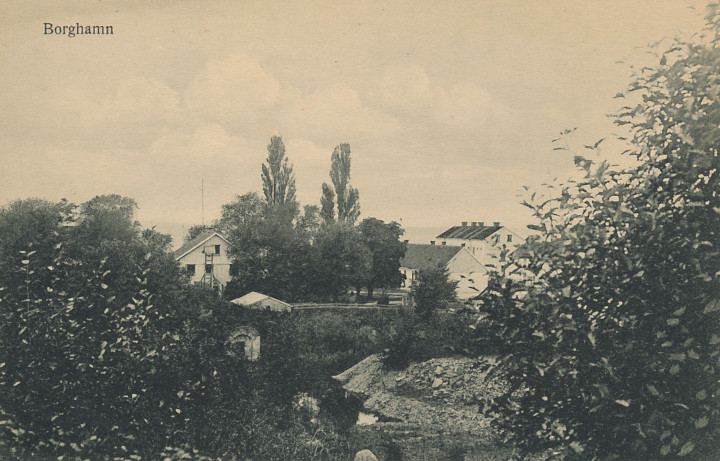

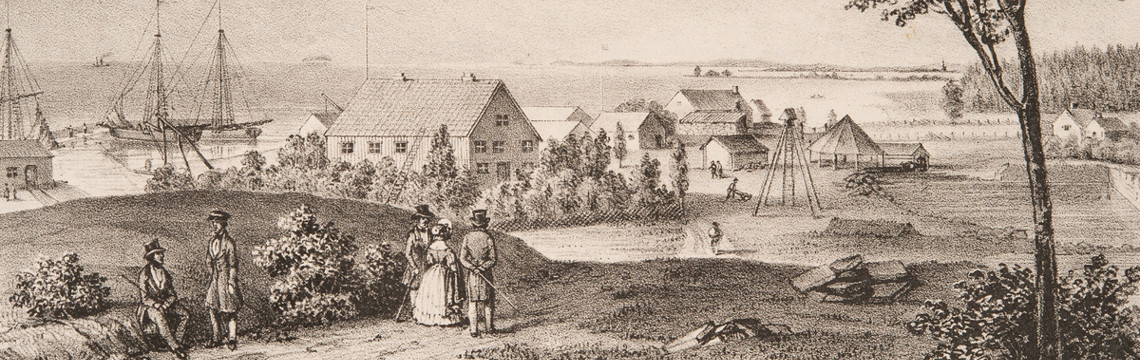
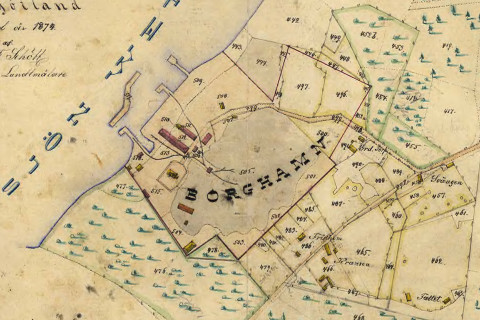 Borghamn on the map of Wästerlösa, 1874
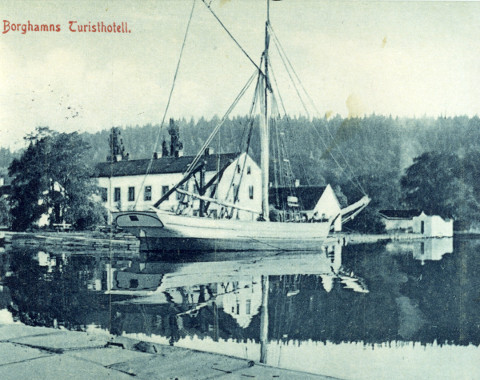 Borghamn's Turisthotel (Annex) with "Svea", built in Västerås
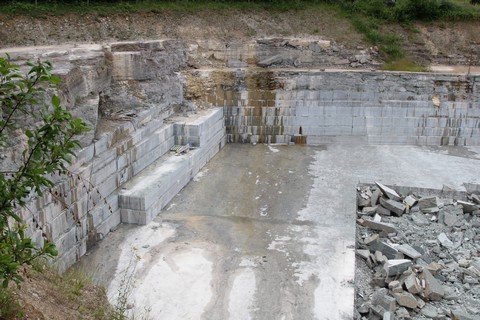 Borghamn's limestone quarry
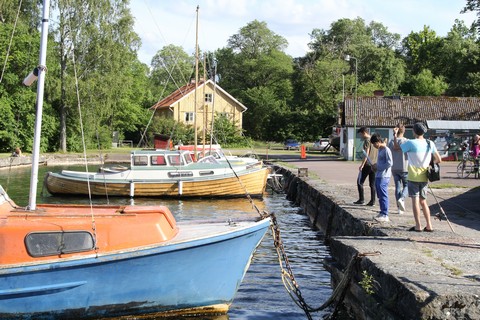 Inner harbour in Borghamn